
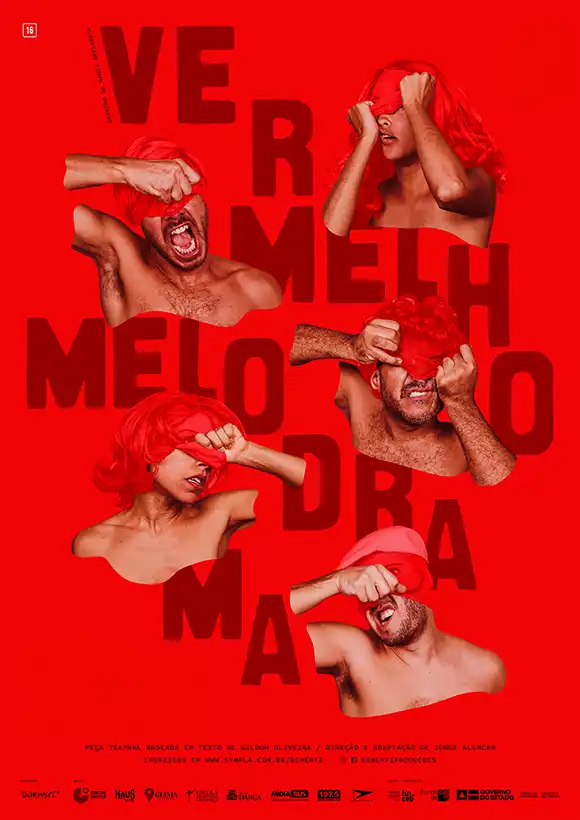
Vermelho Melodrama
Dimenti Produções Culturais
Direction and adaptation: Jorge Alencar
Salvador, Bahia
Premiere: 2019
Page updated on 30 October 2026
Photos: Patrícia Almeida
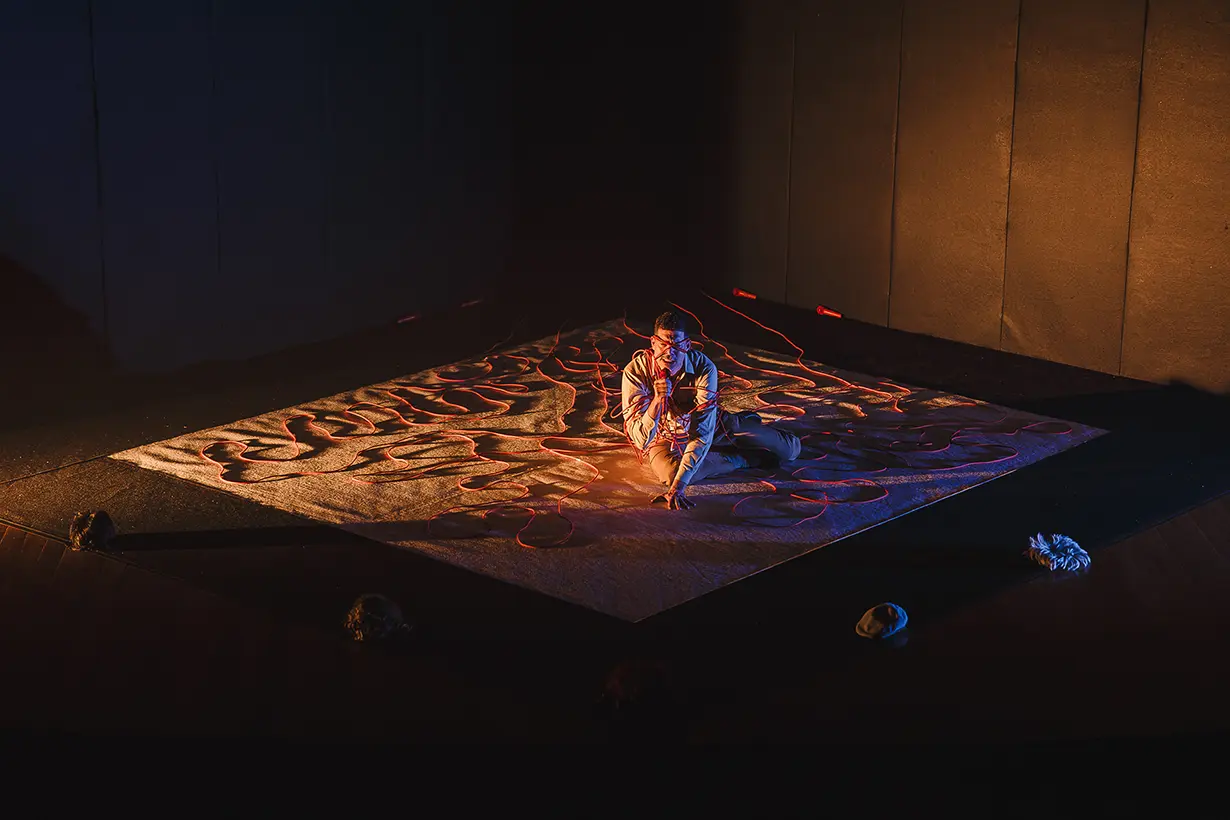
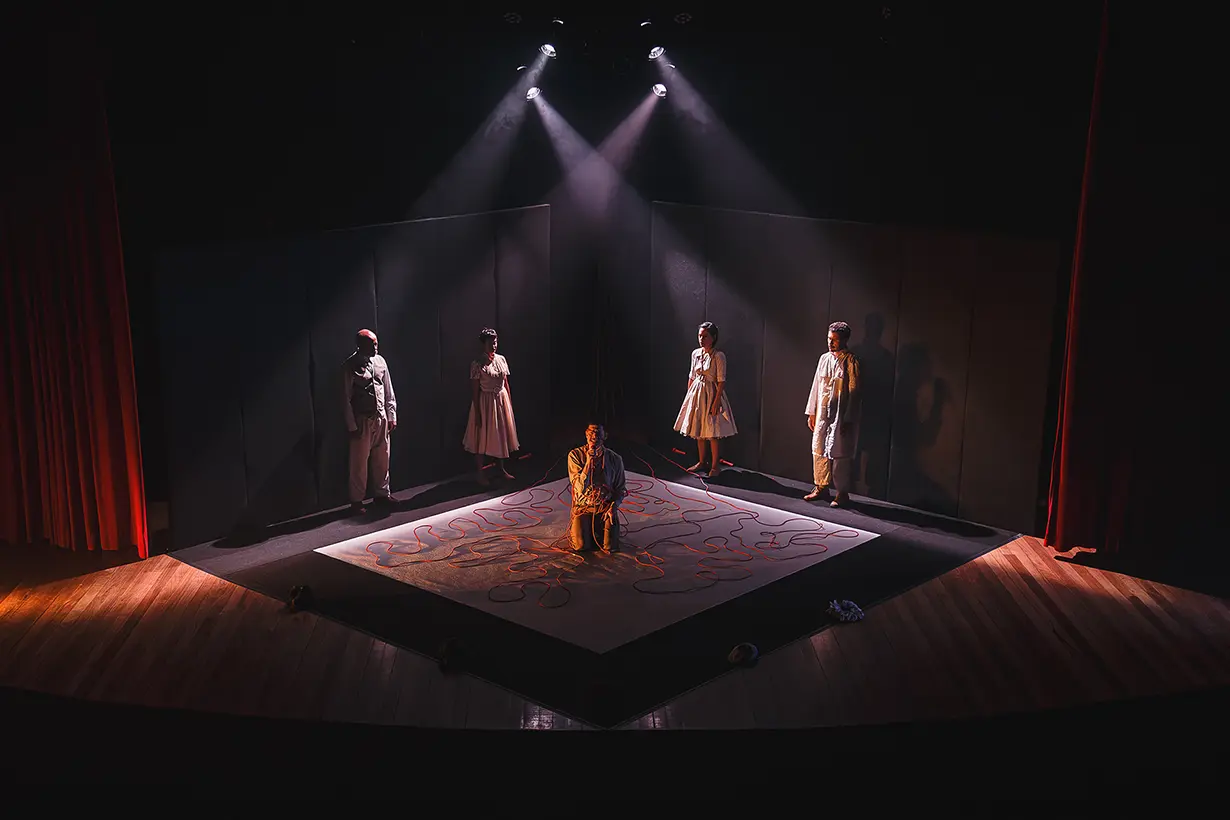
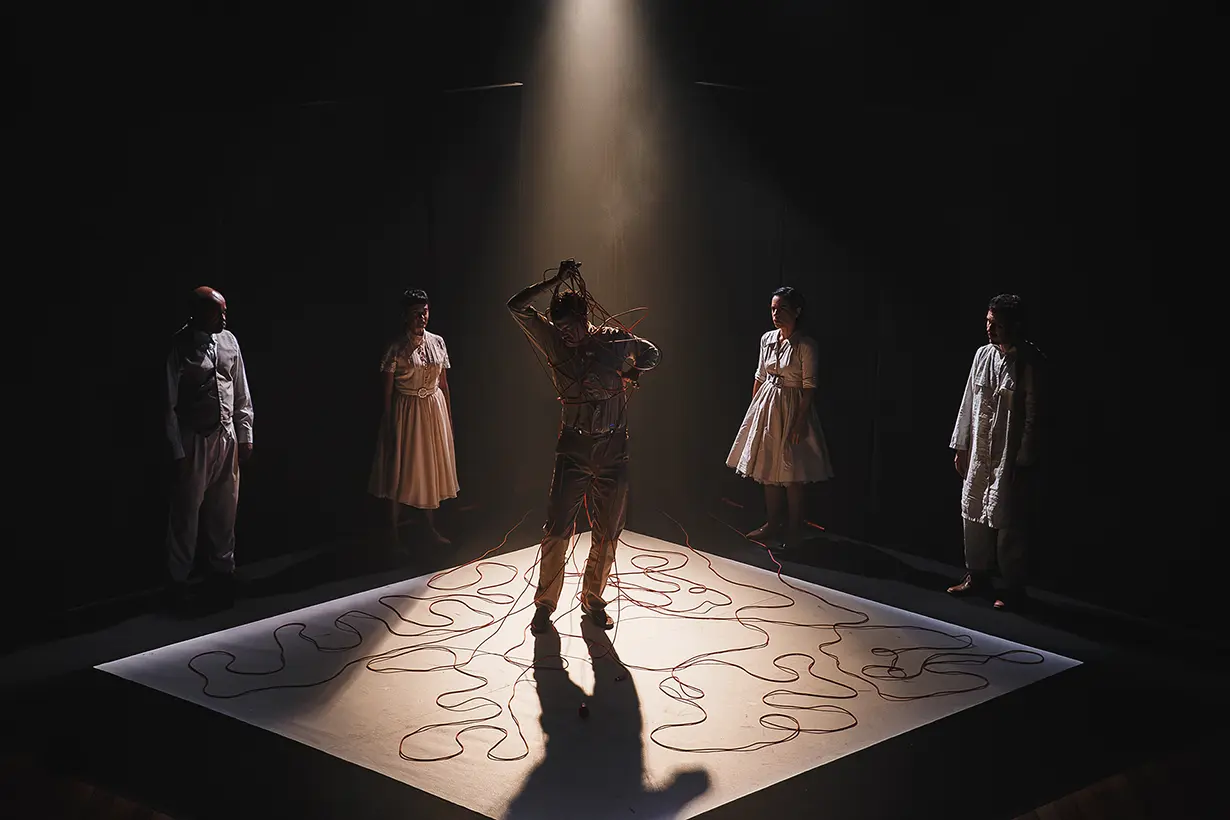
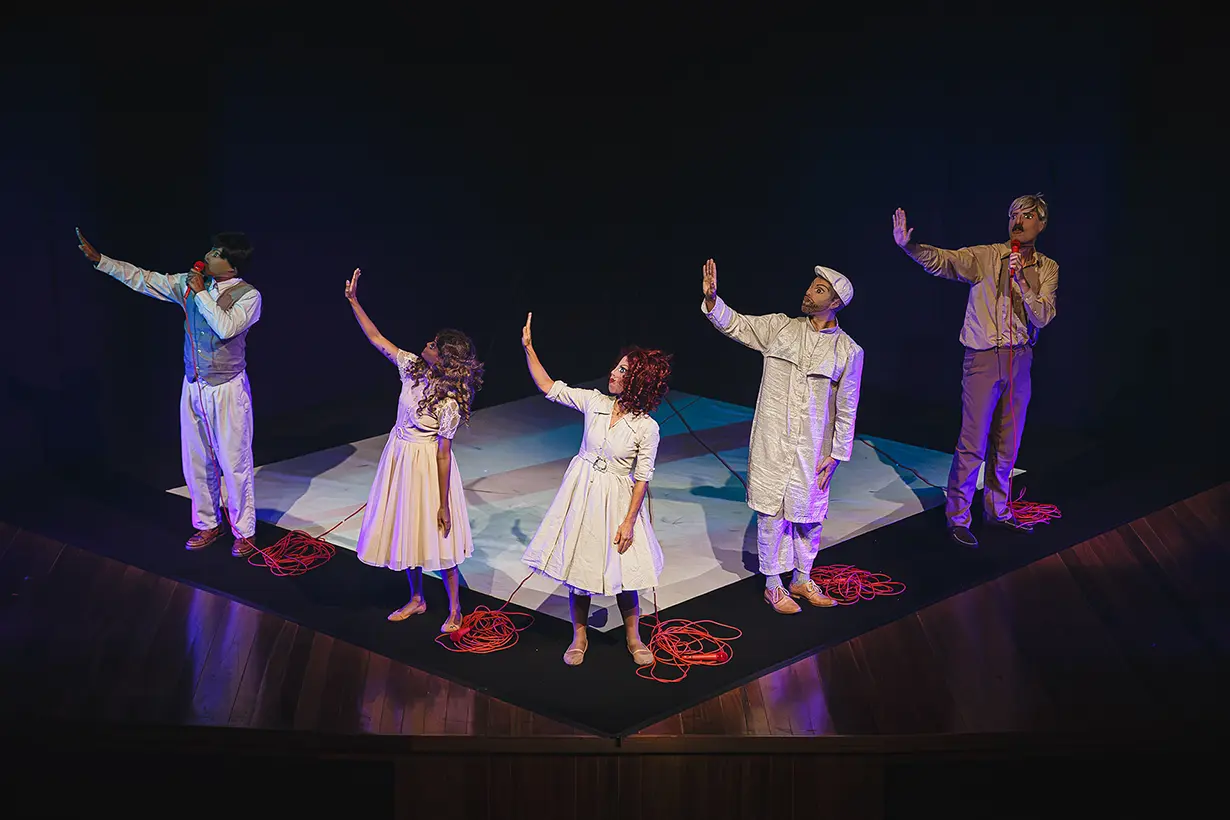
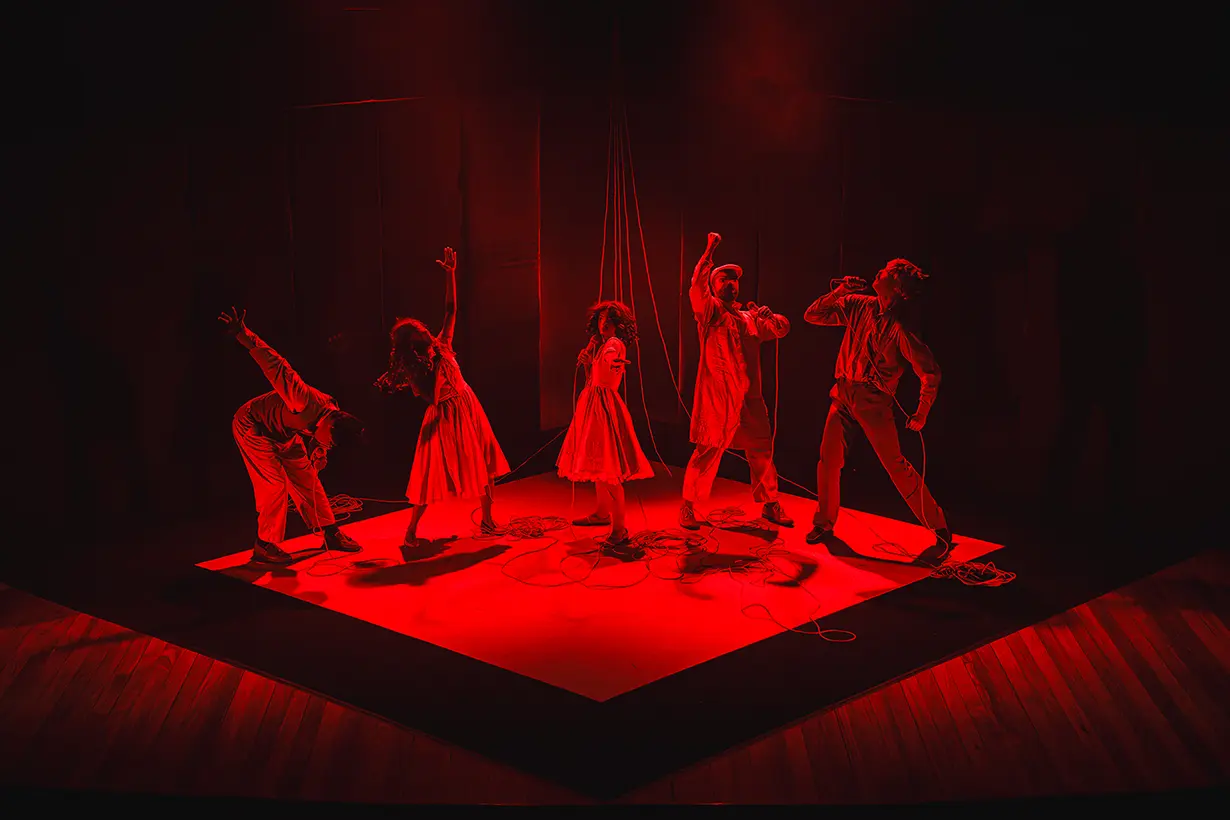
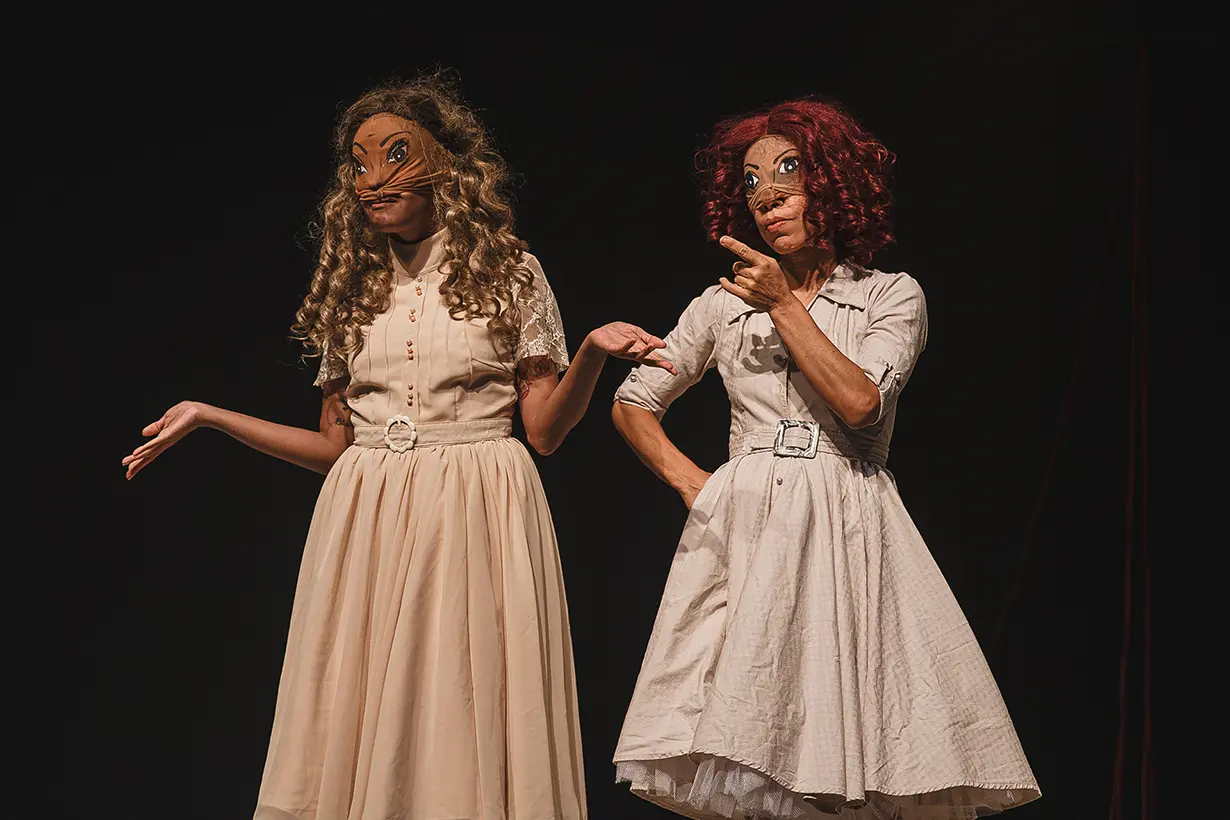
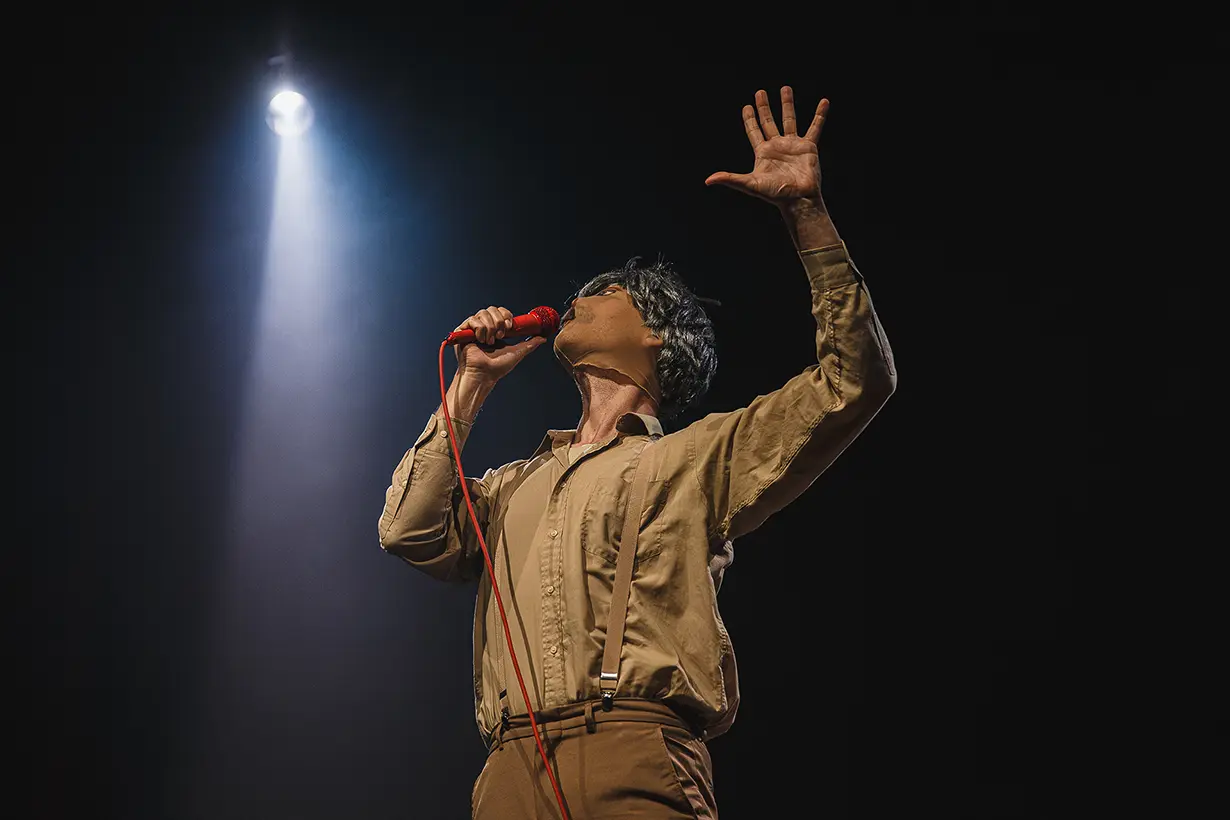
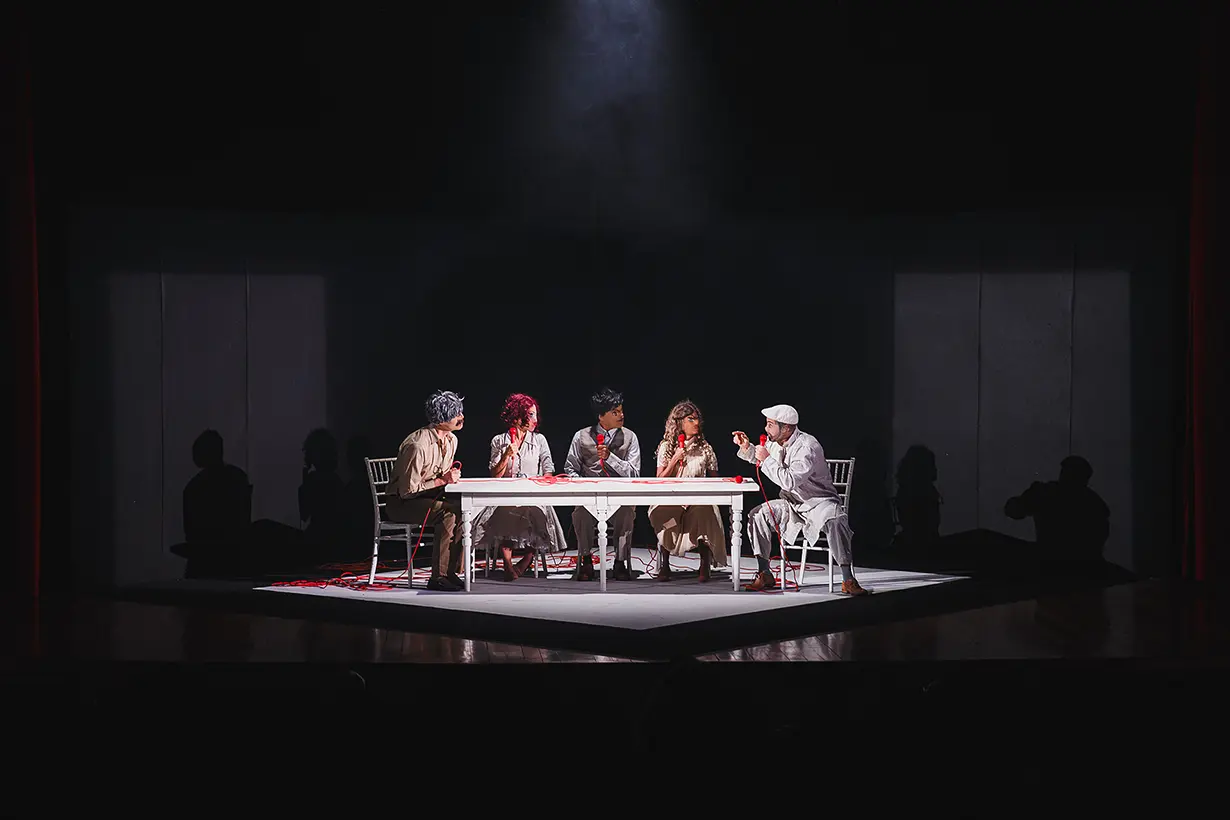
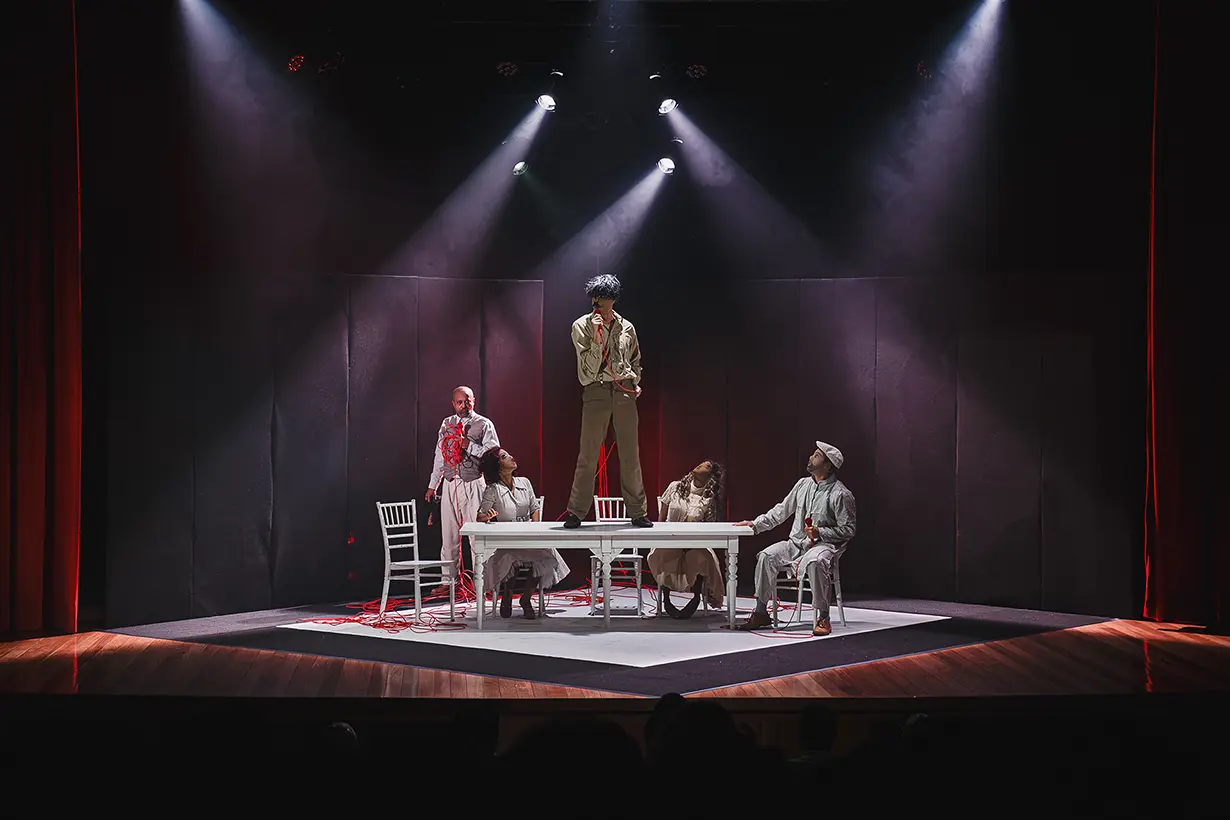
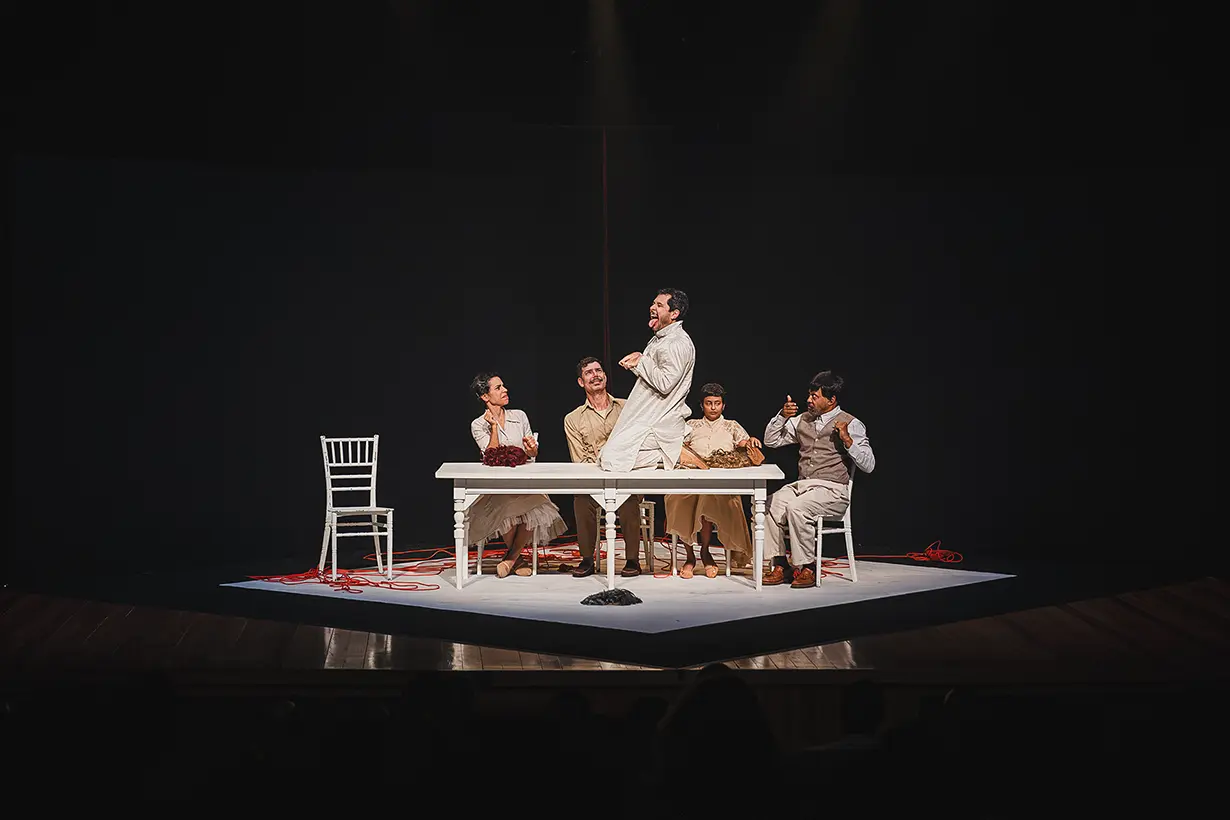
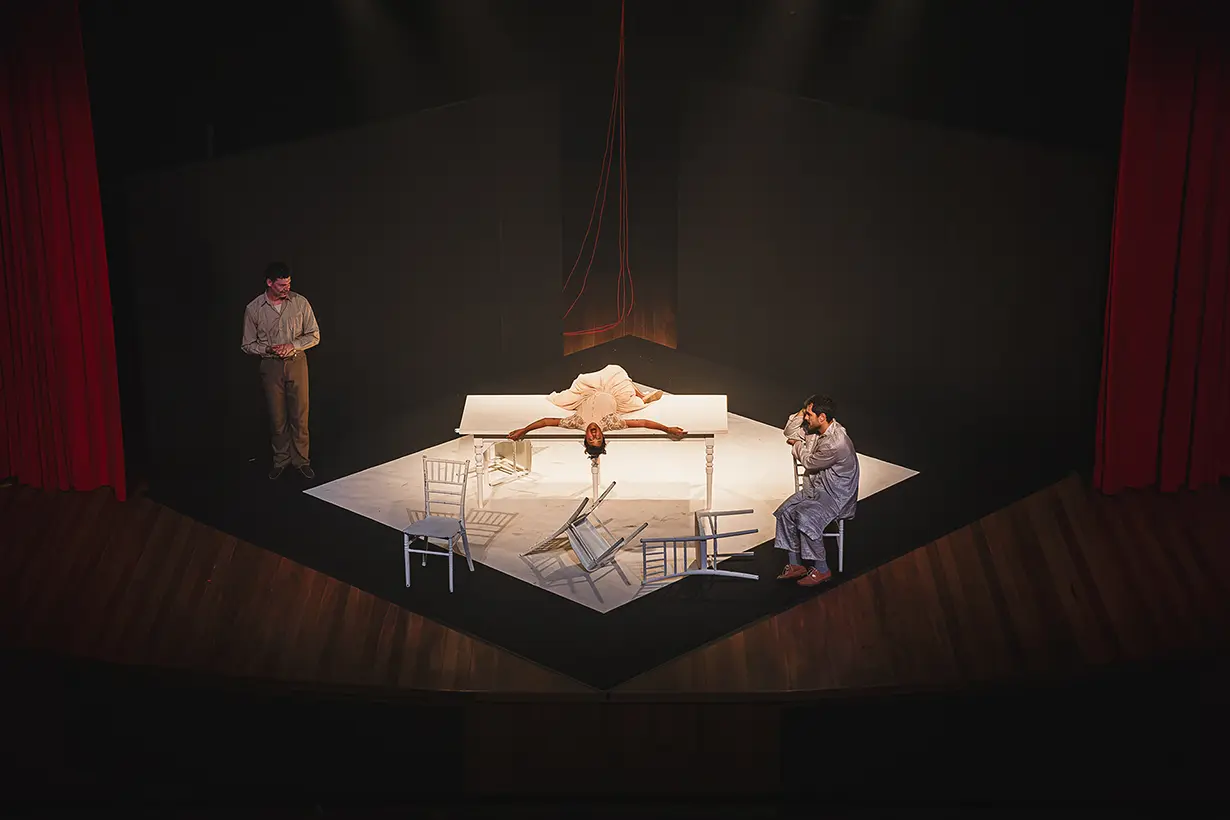
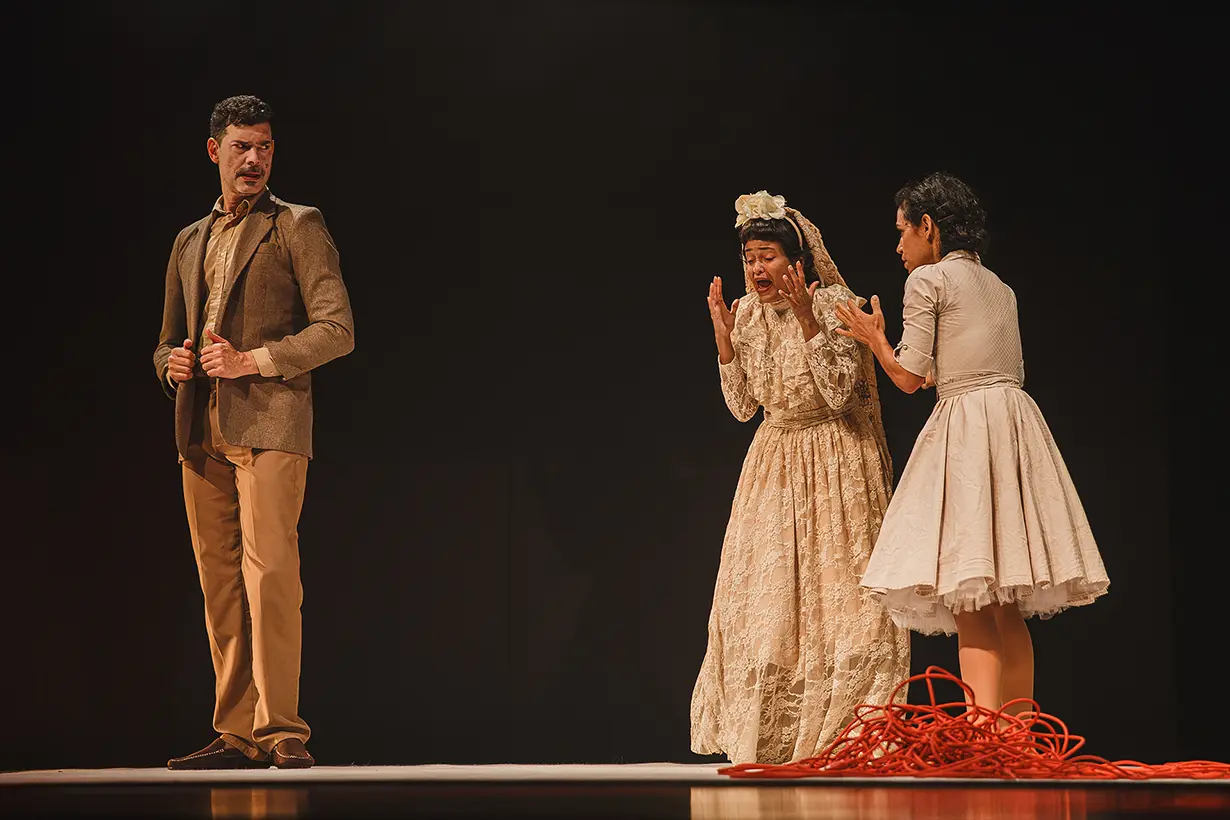
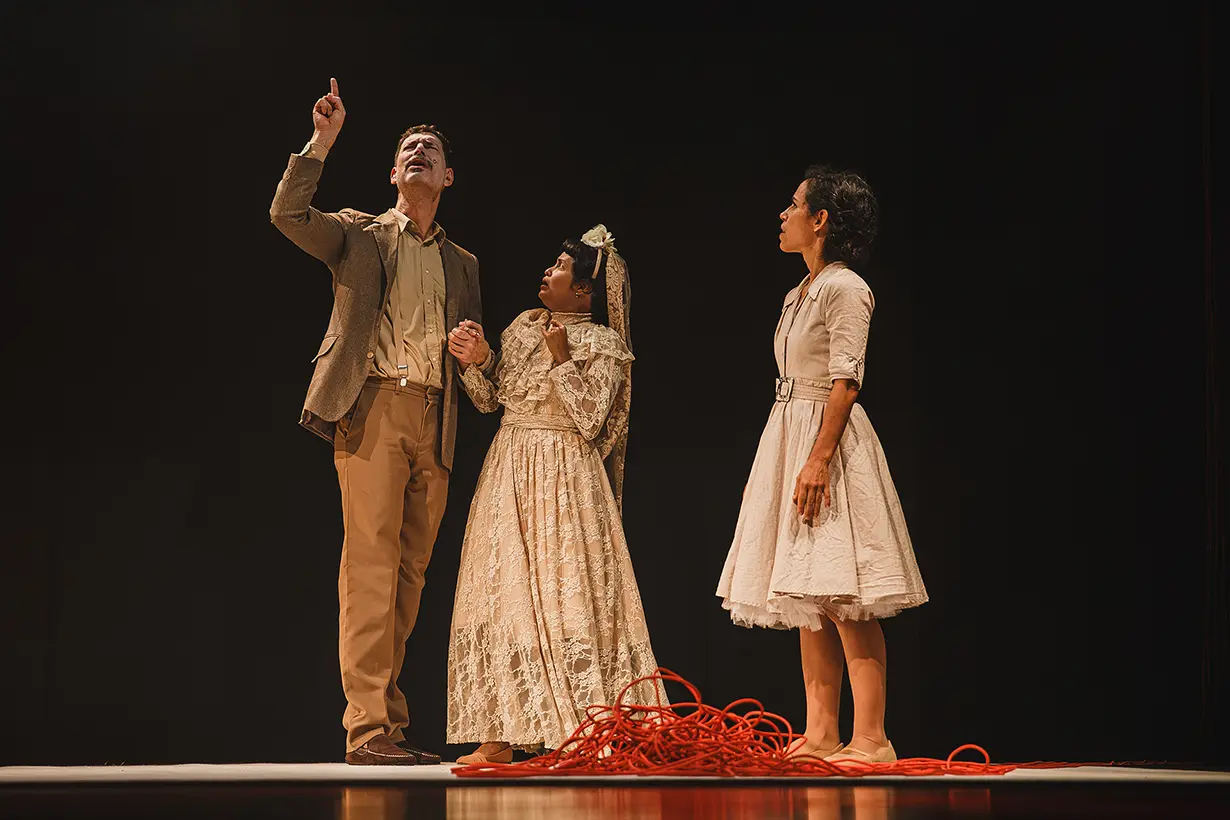
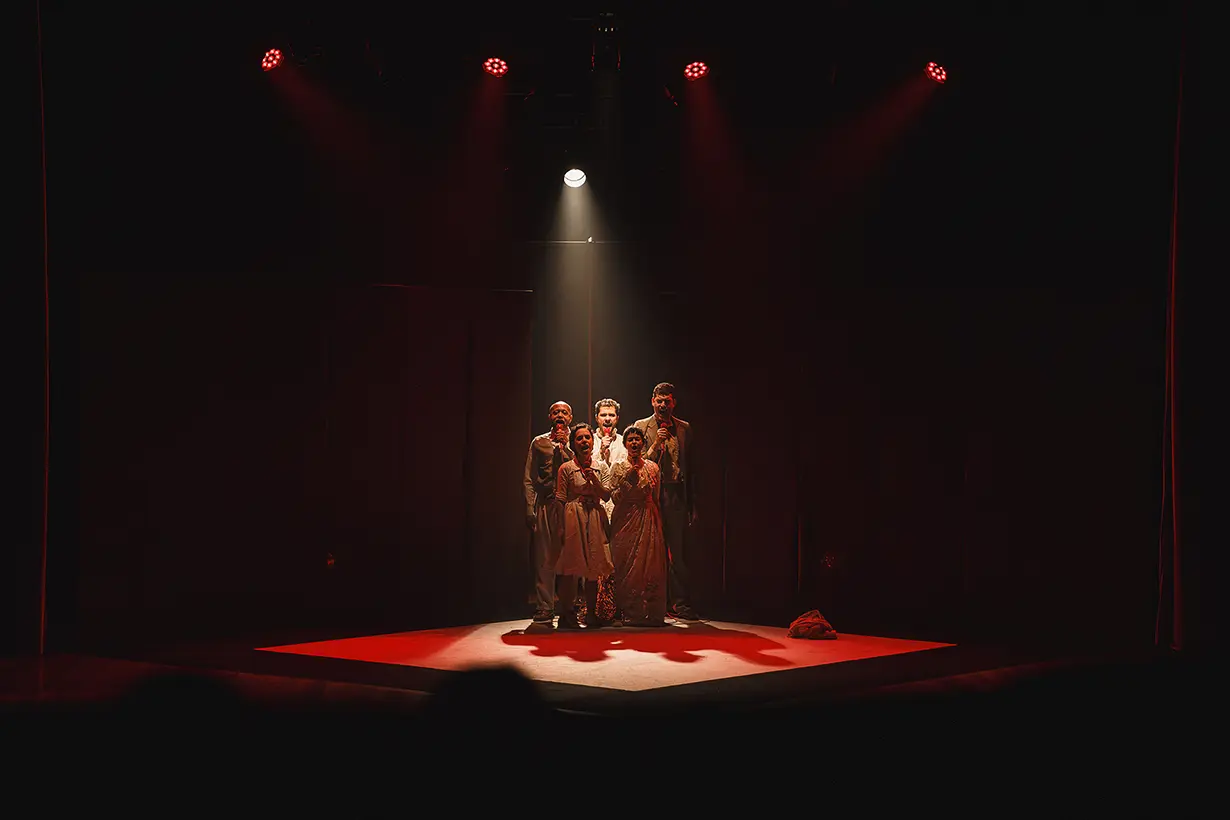
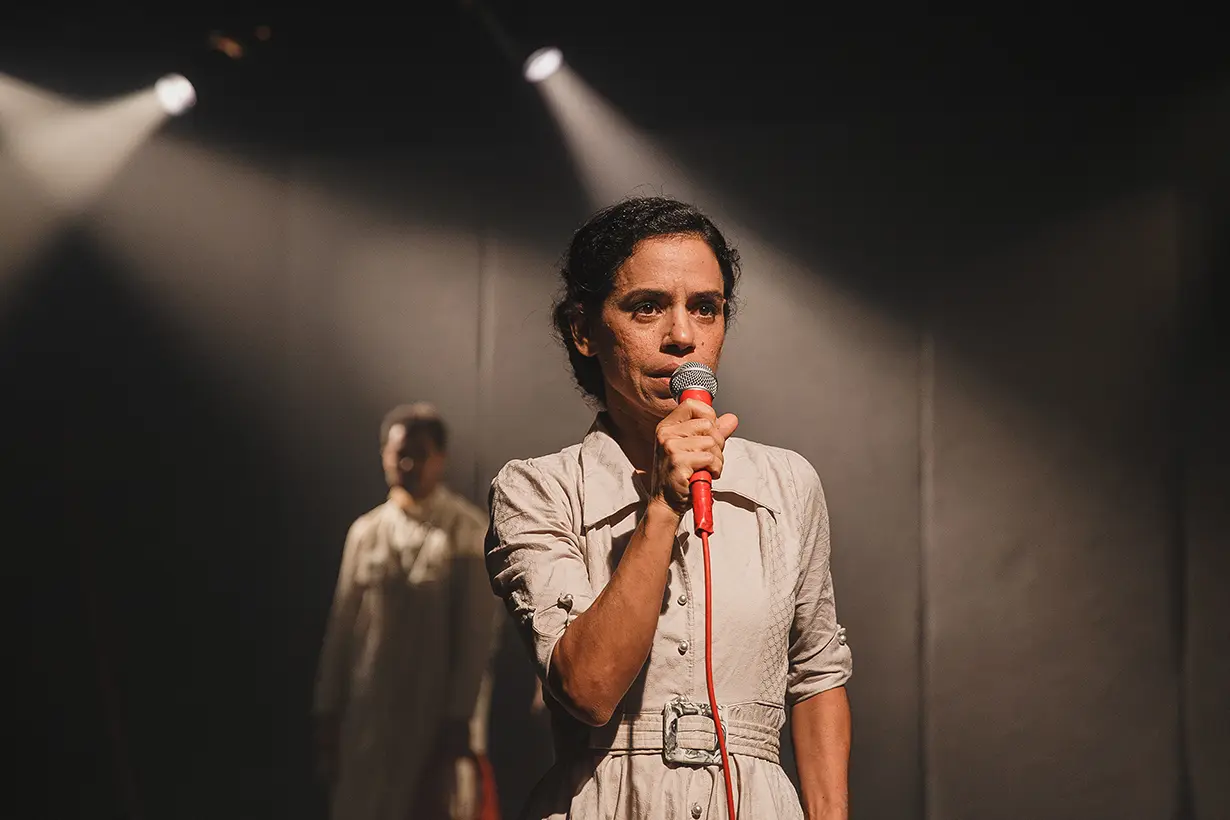
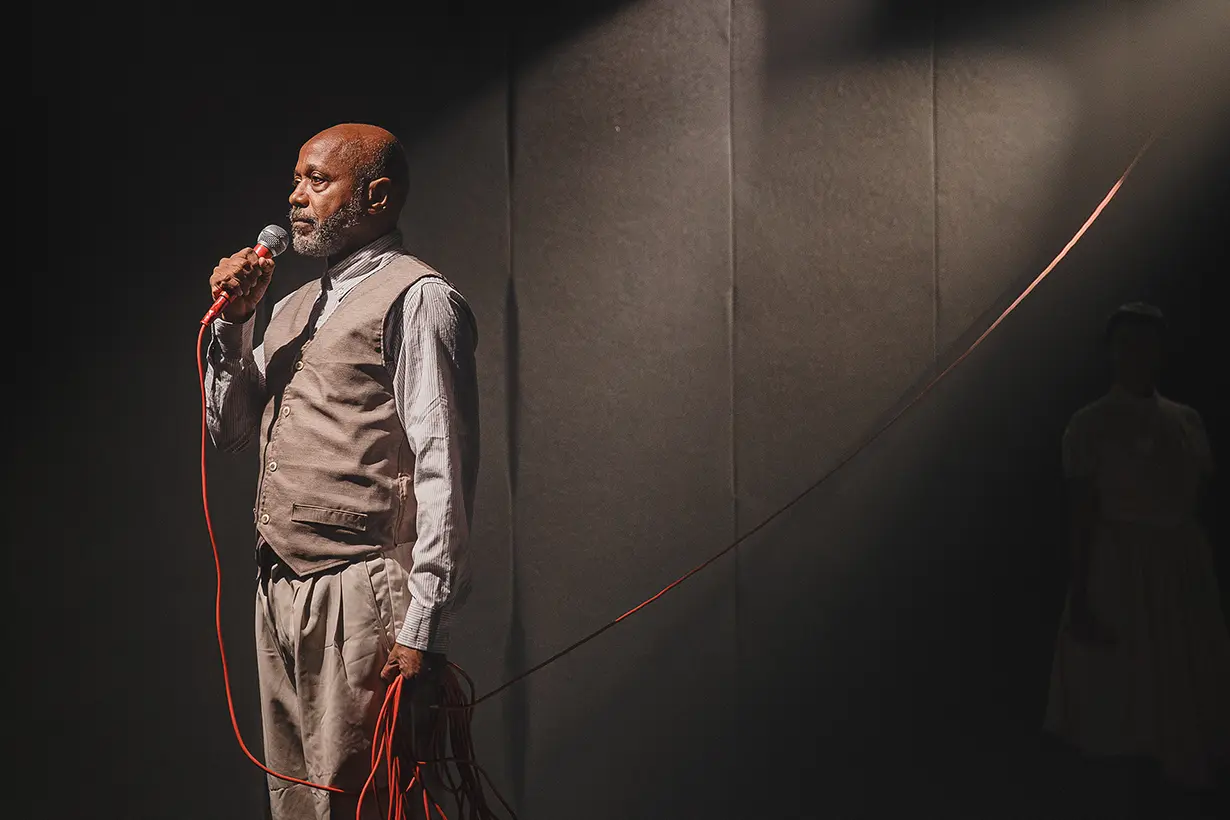
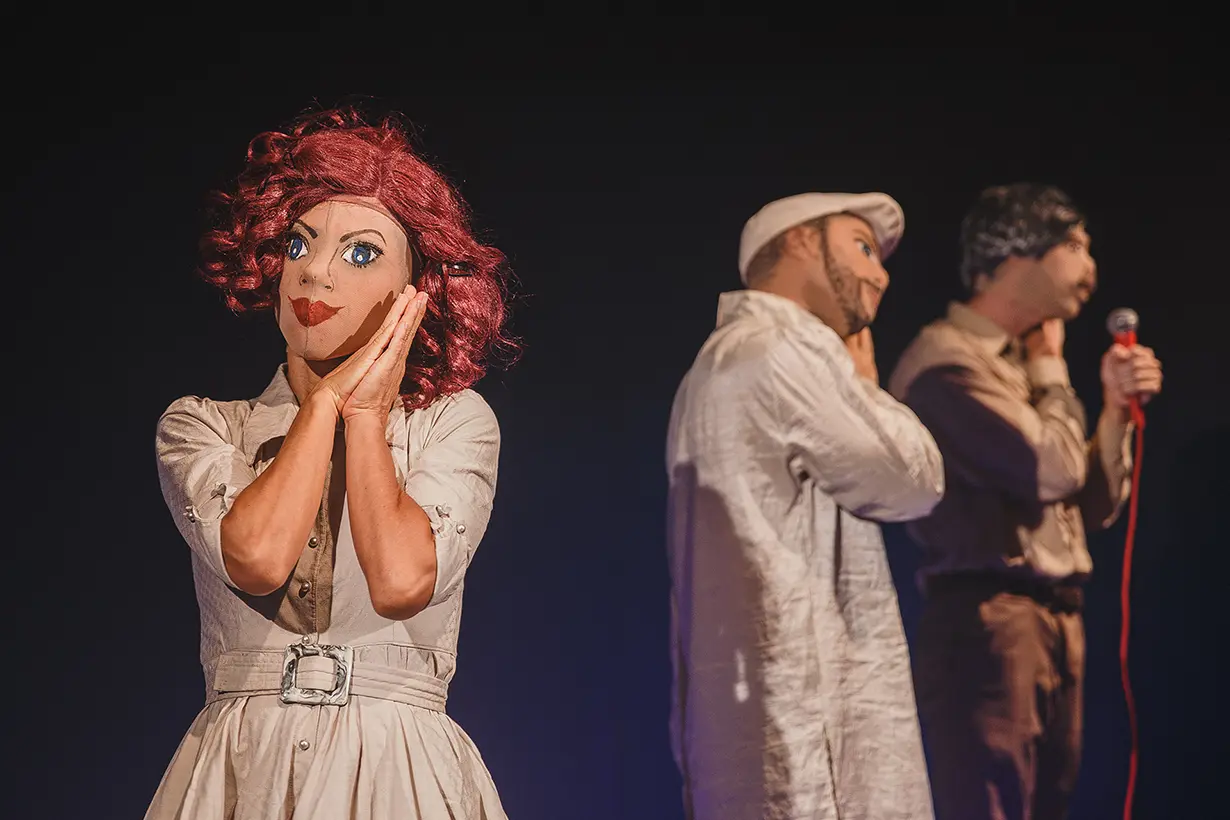
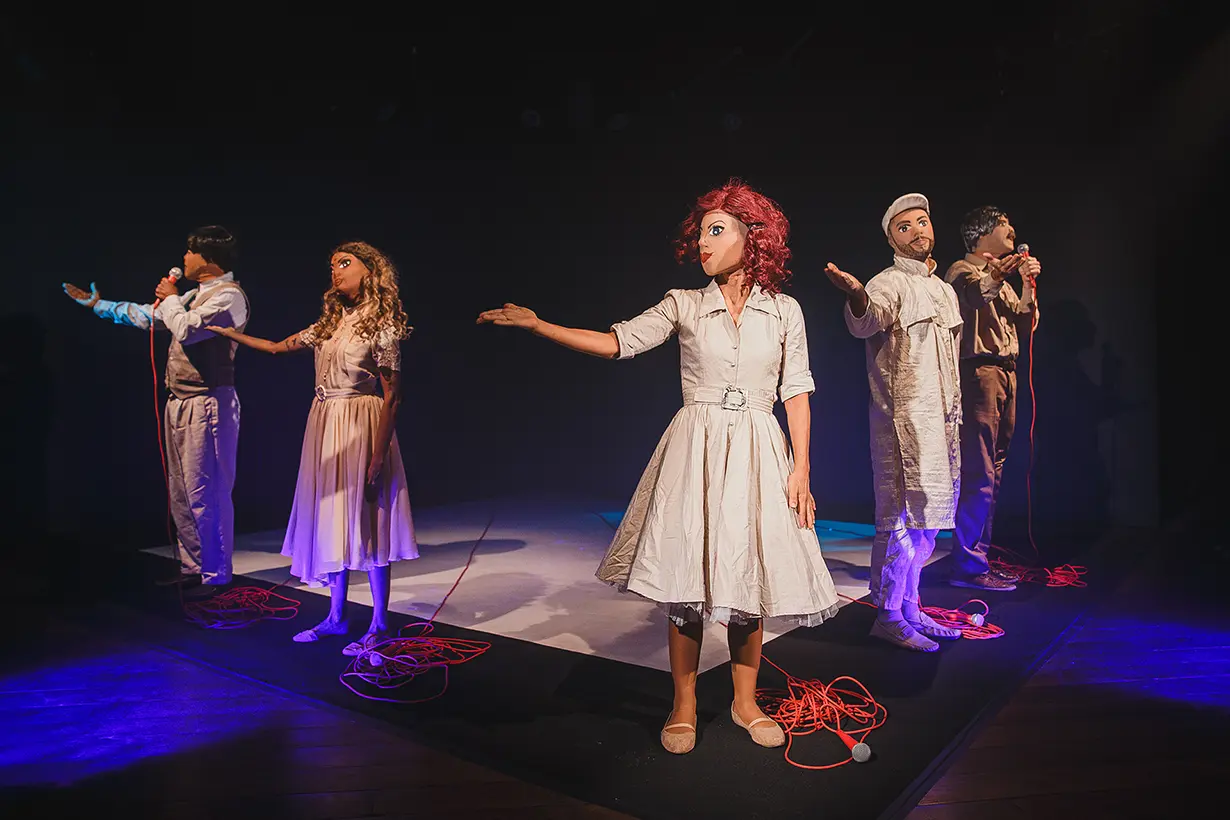
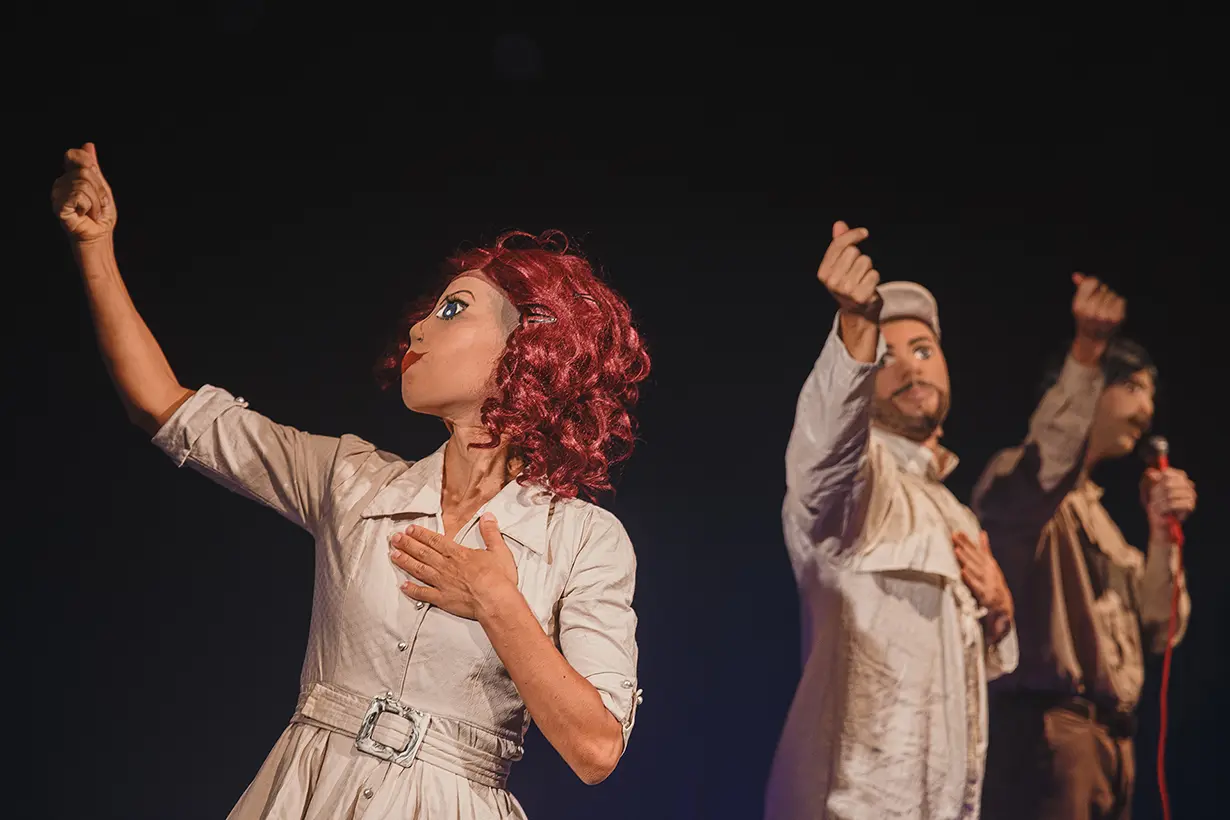
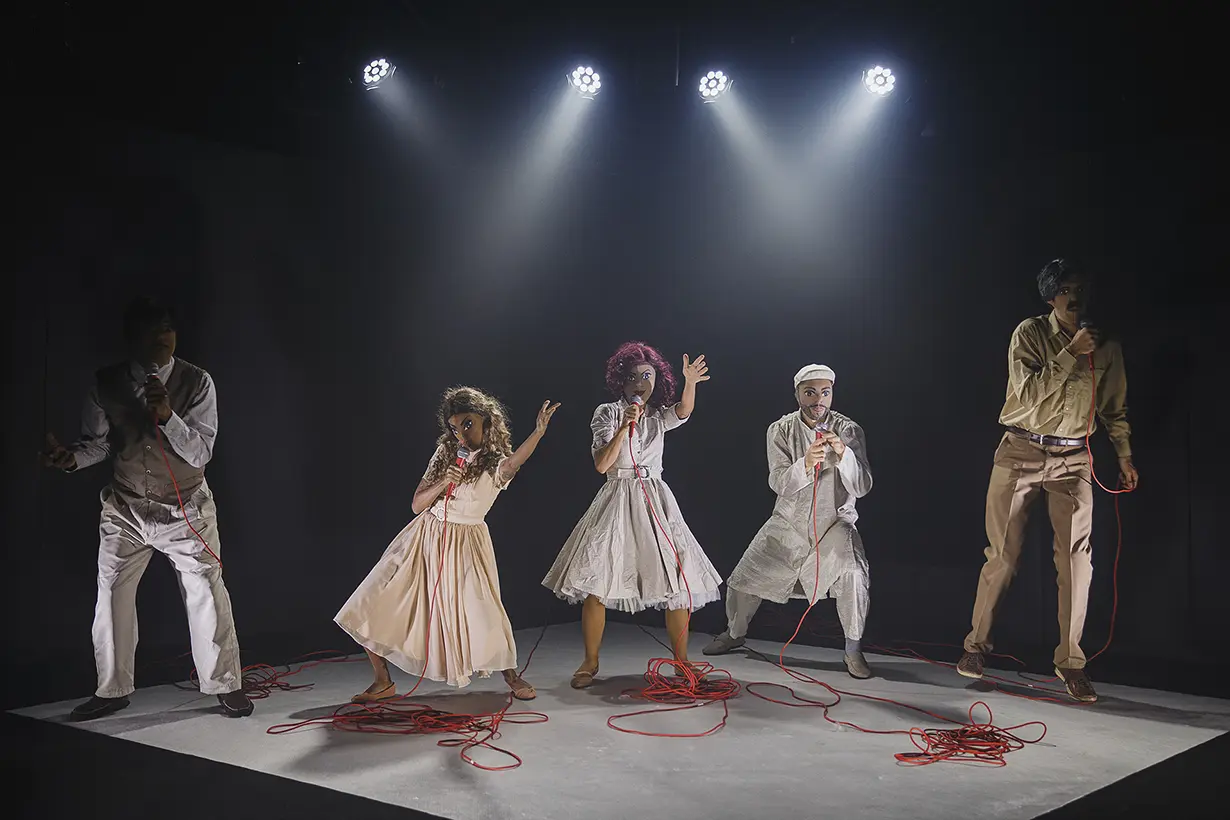
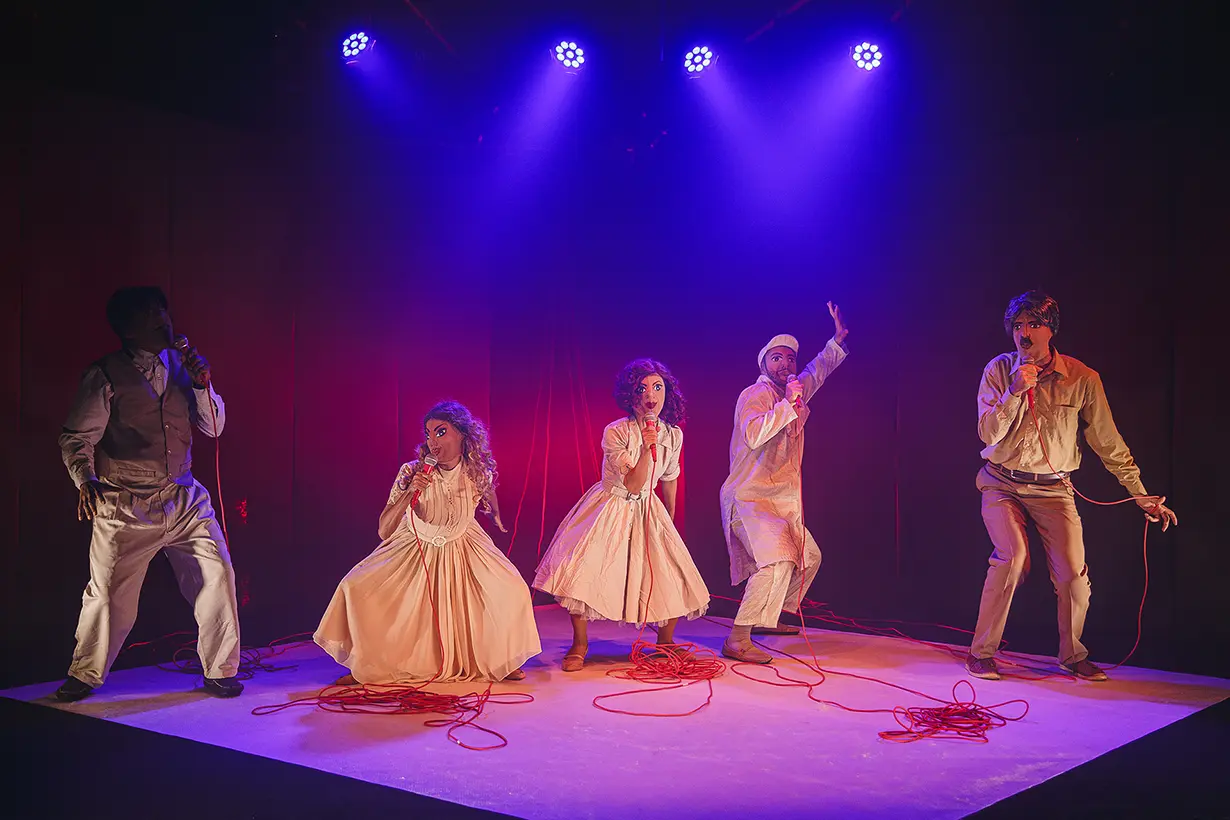
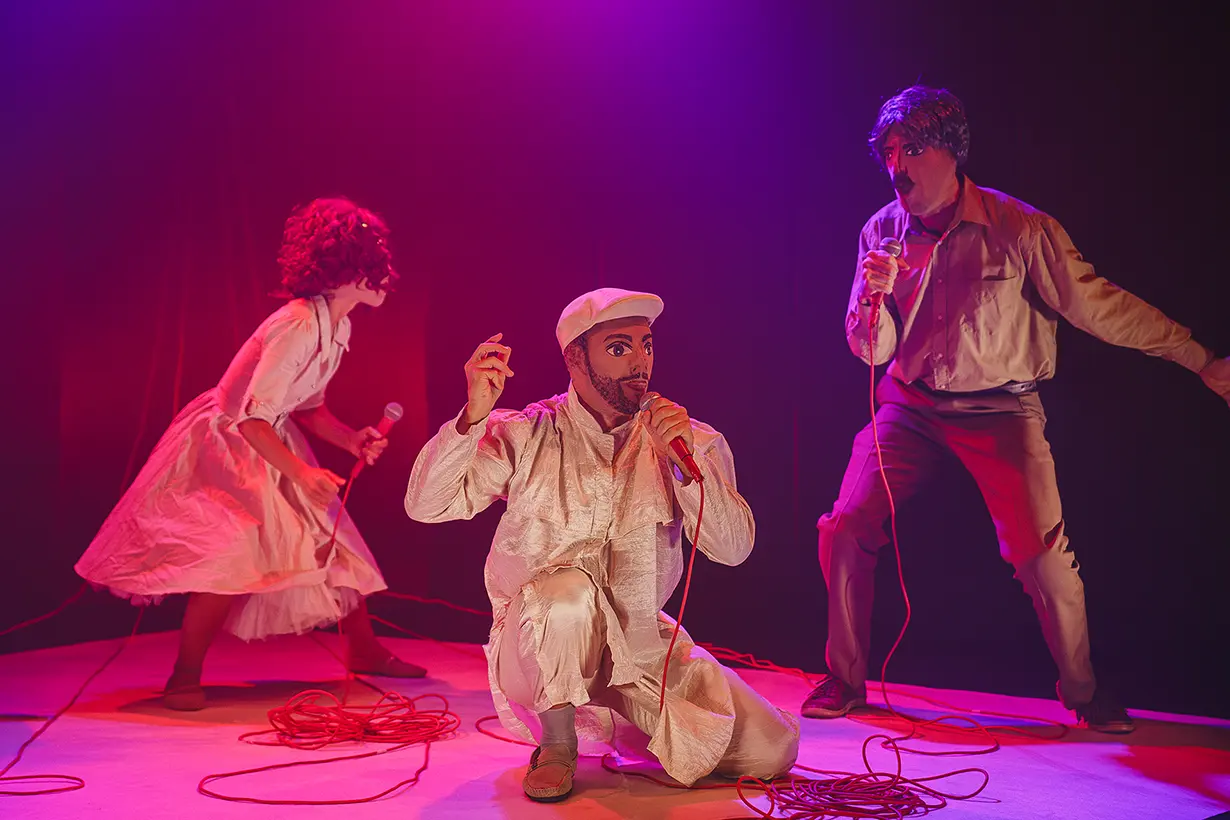
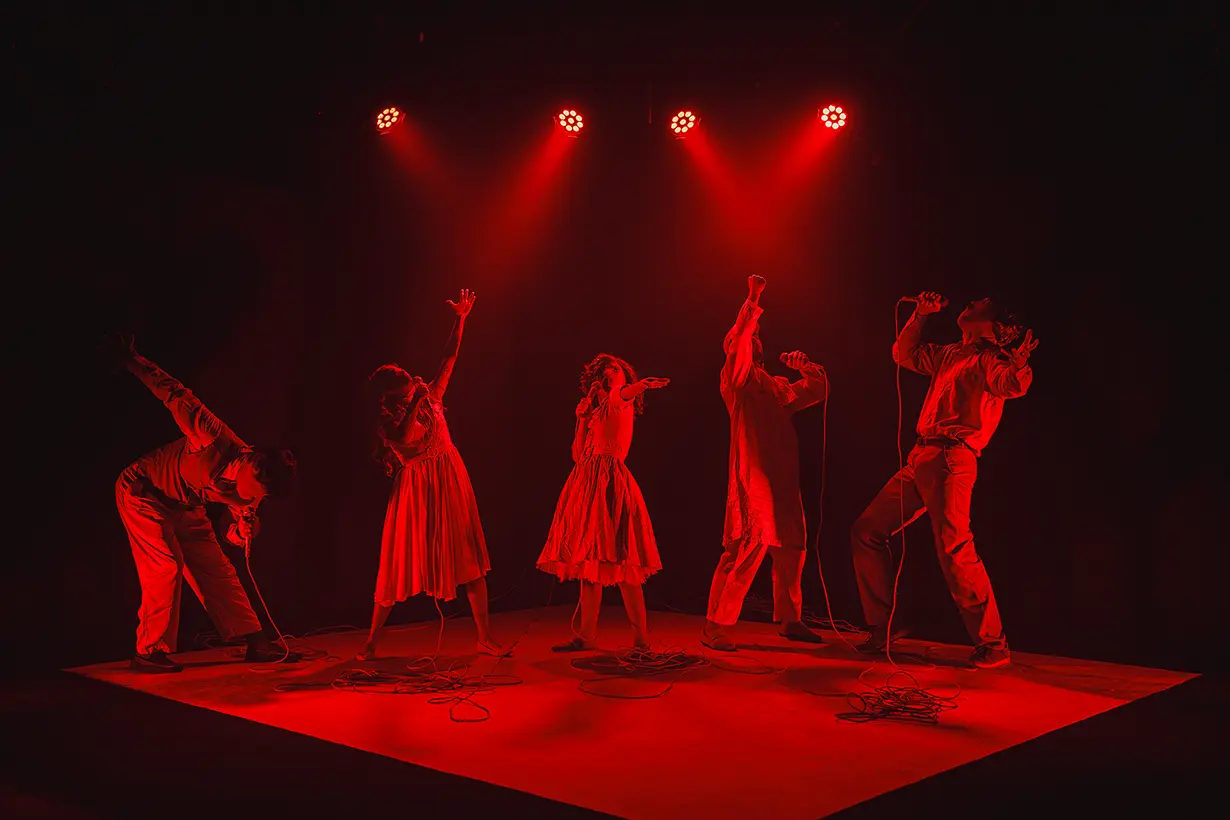
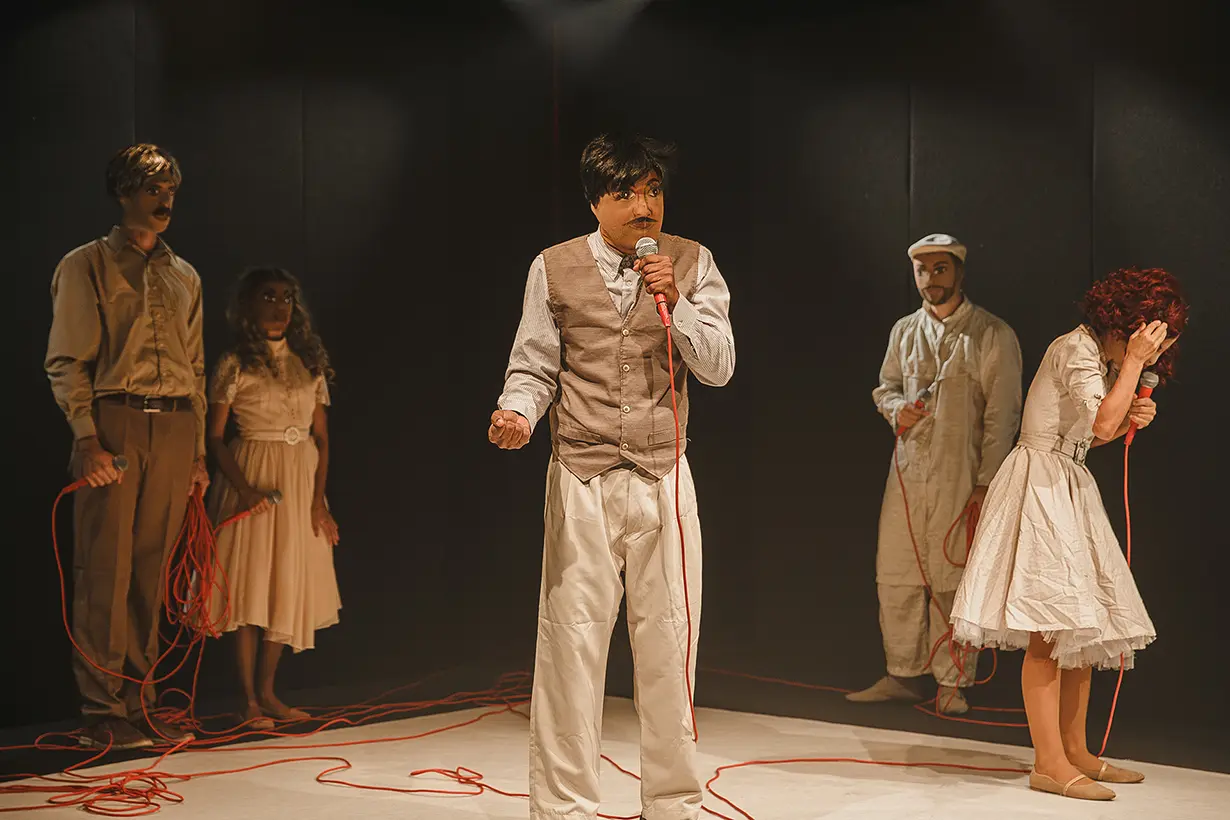
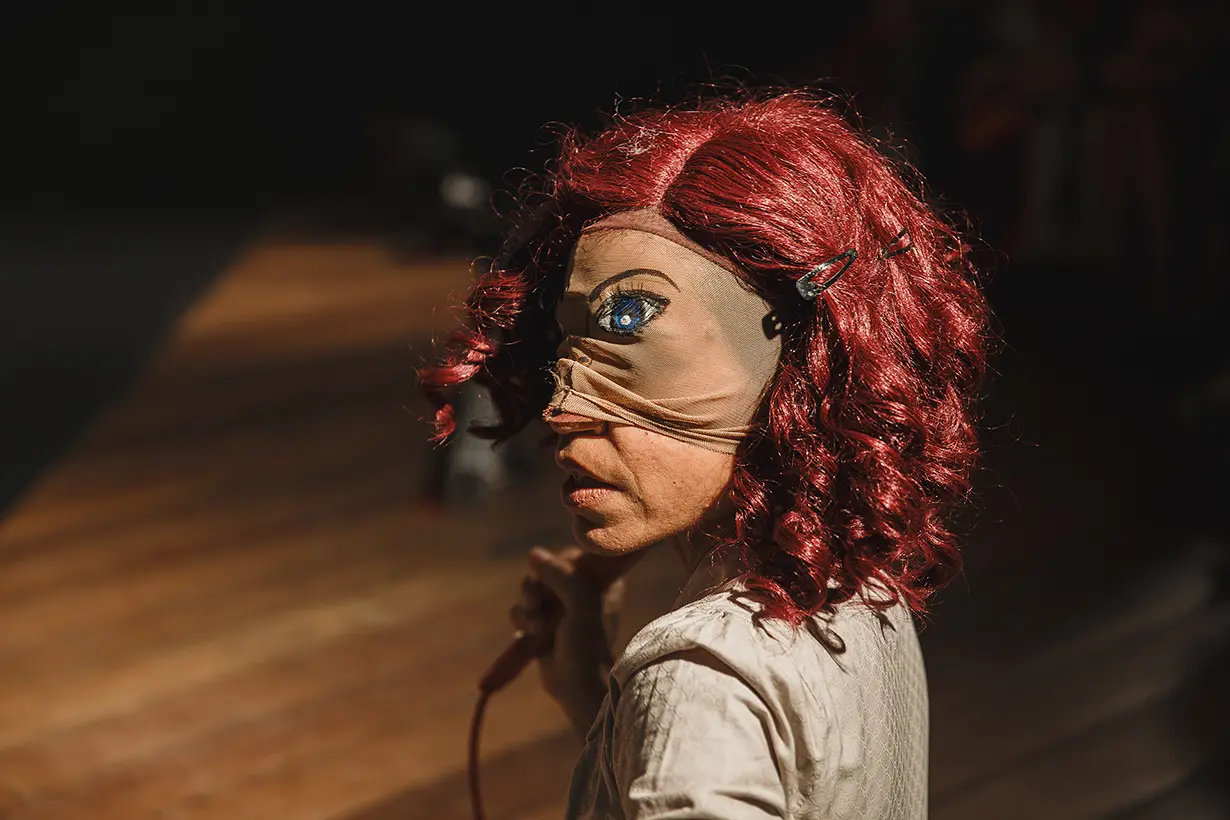
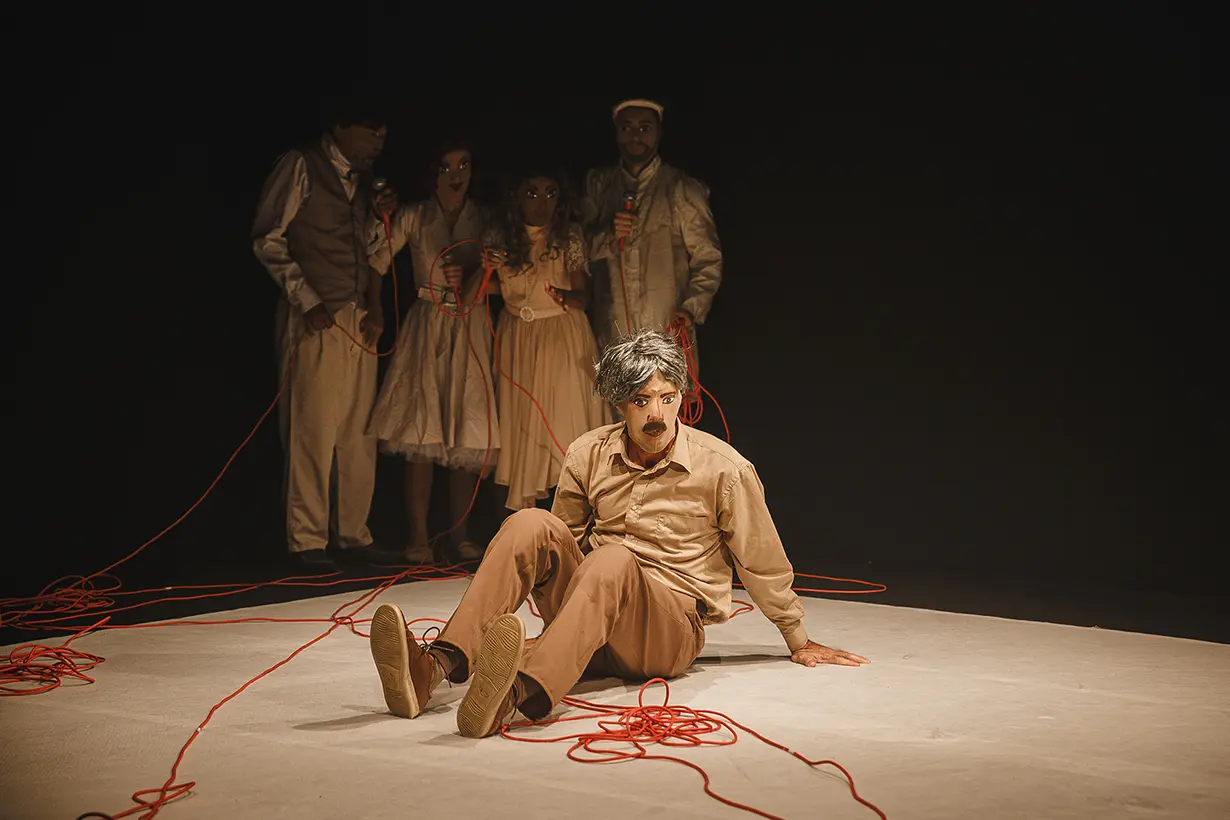
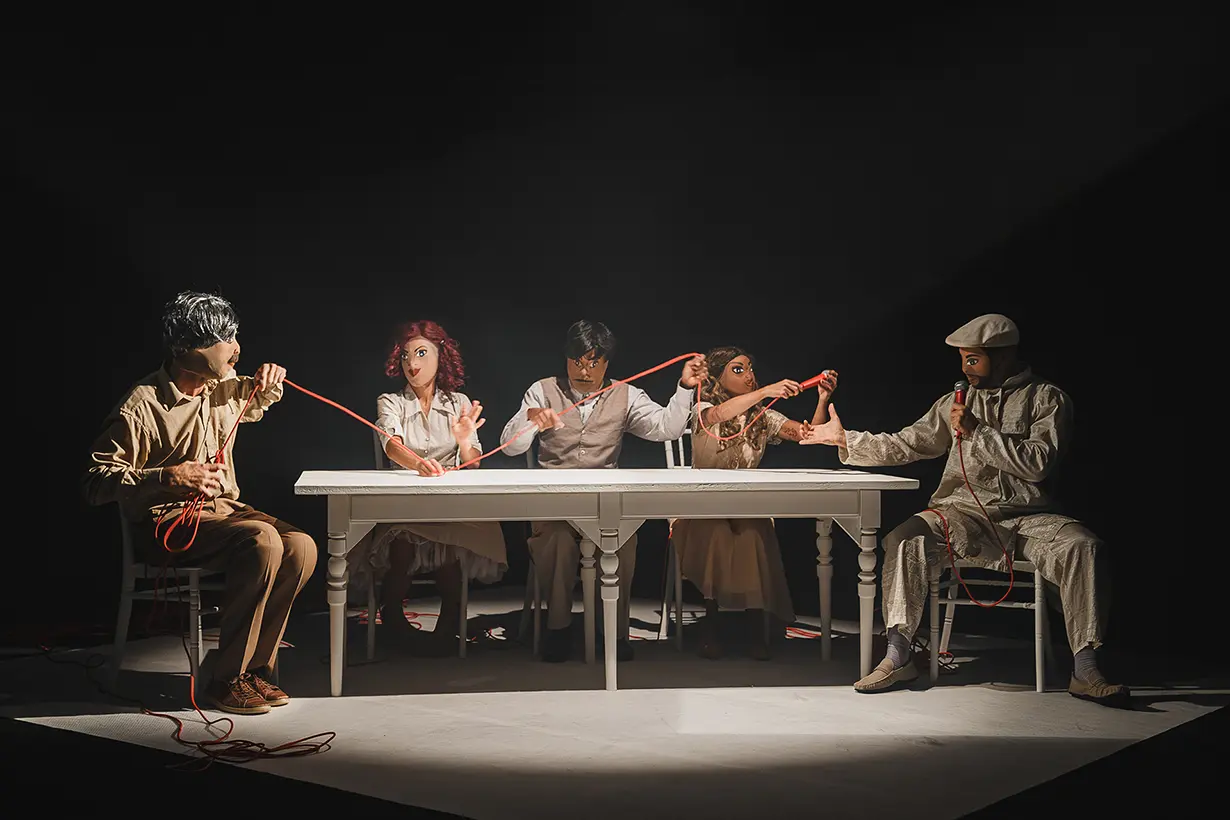
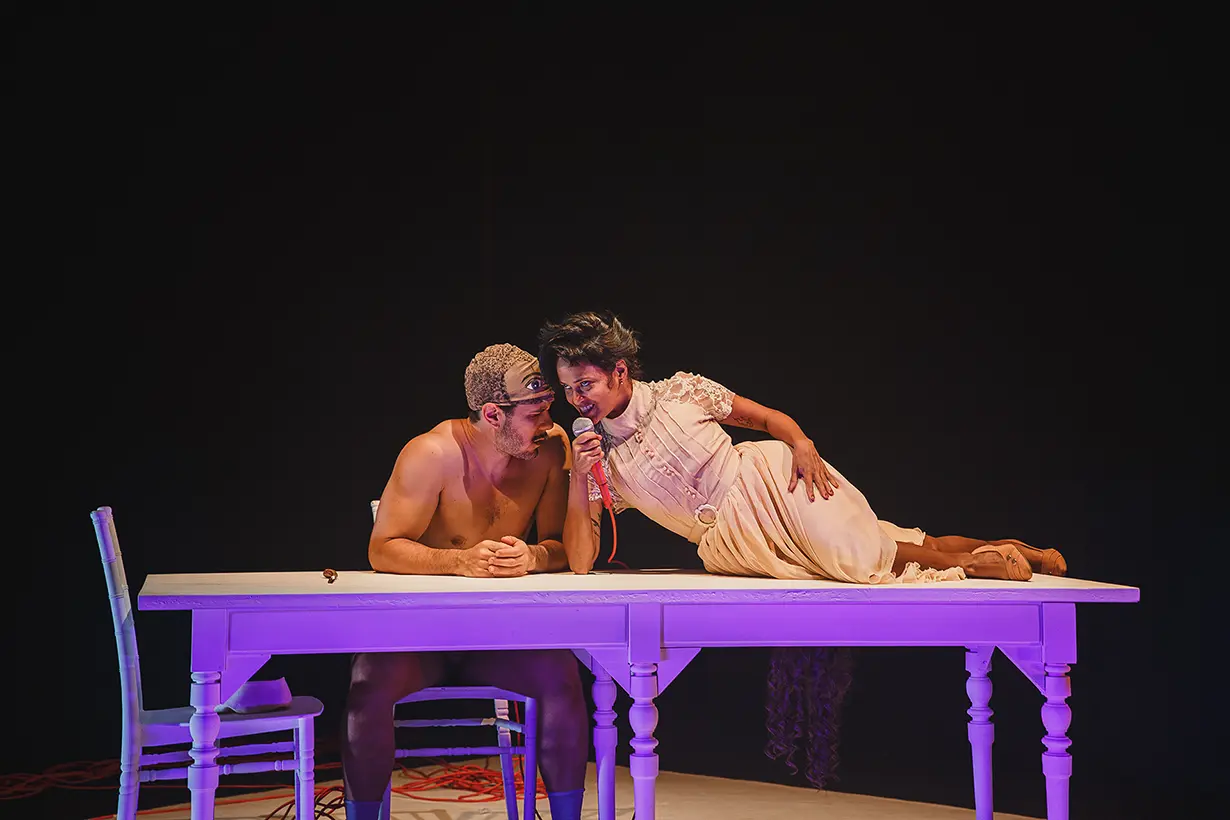
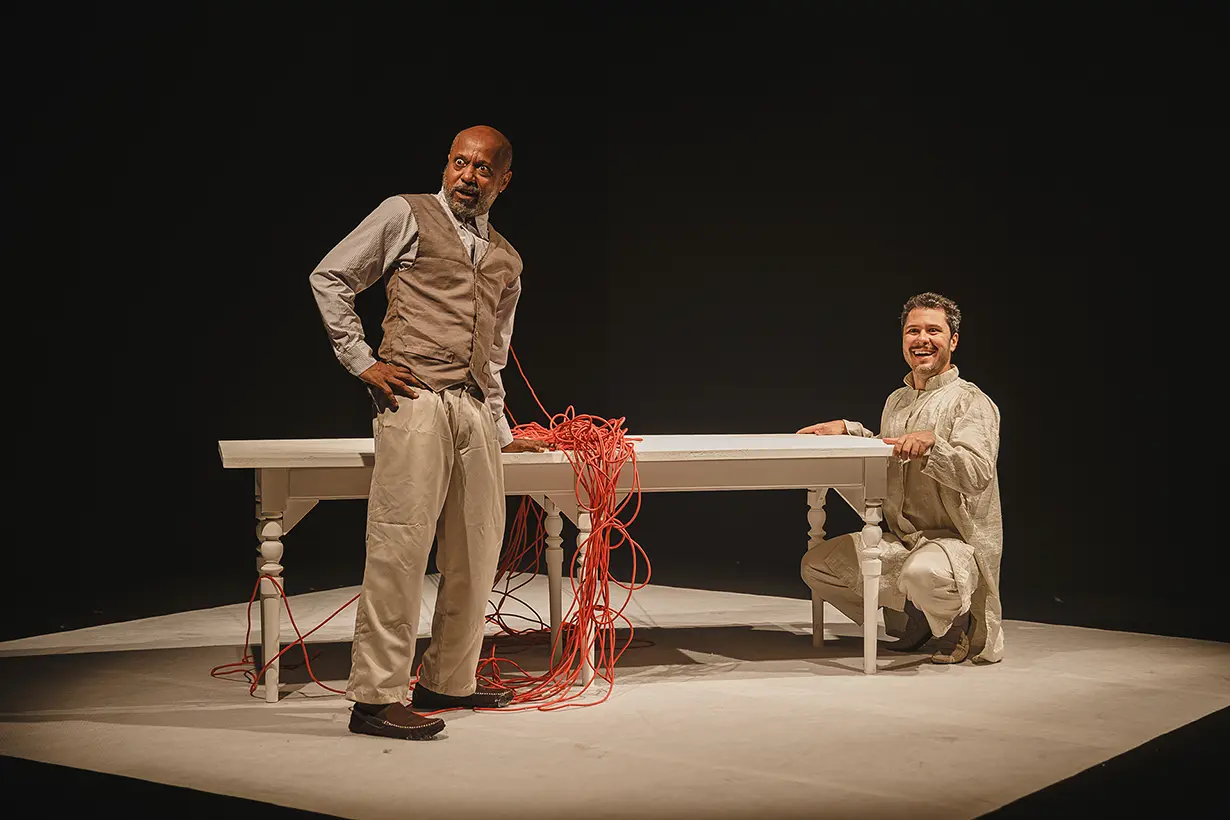
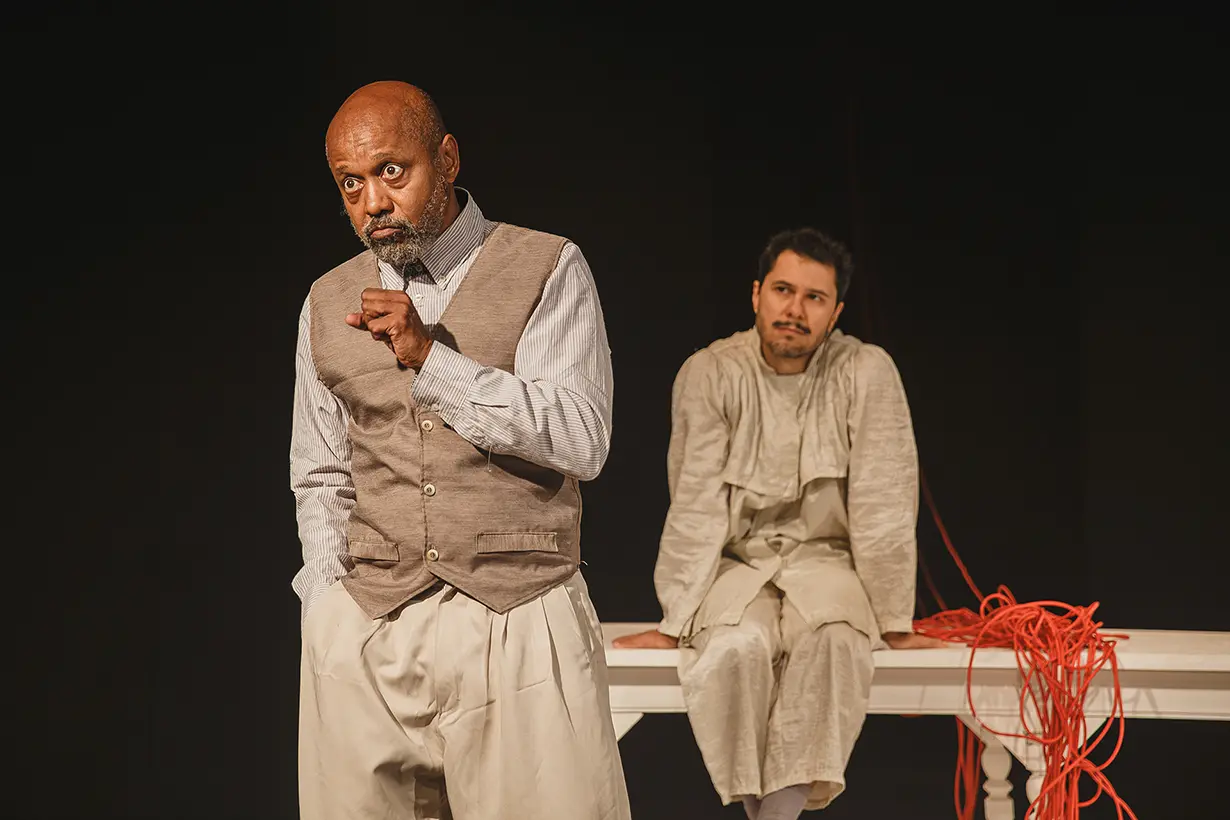
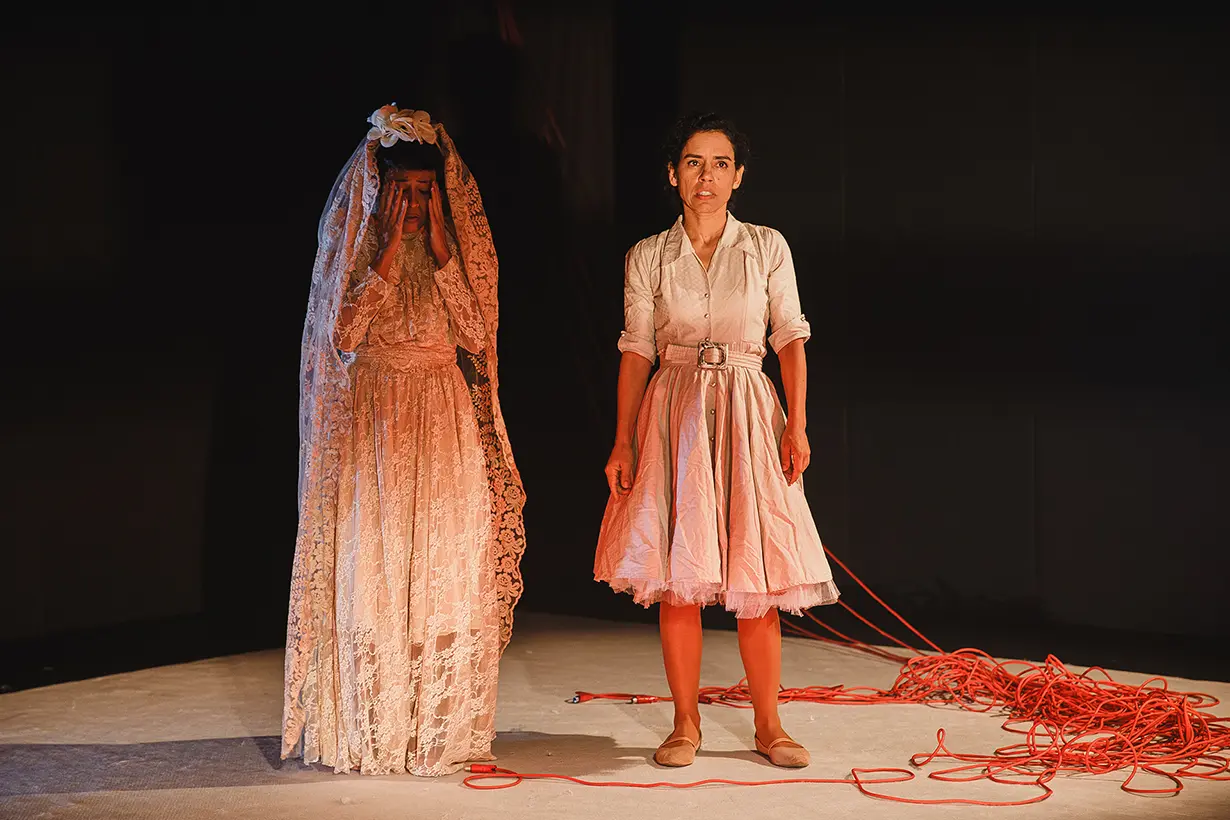
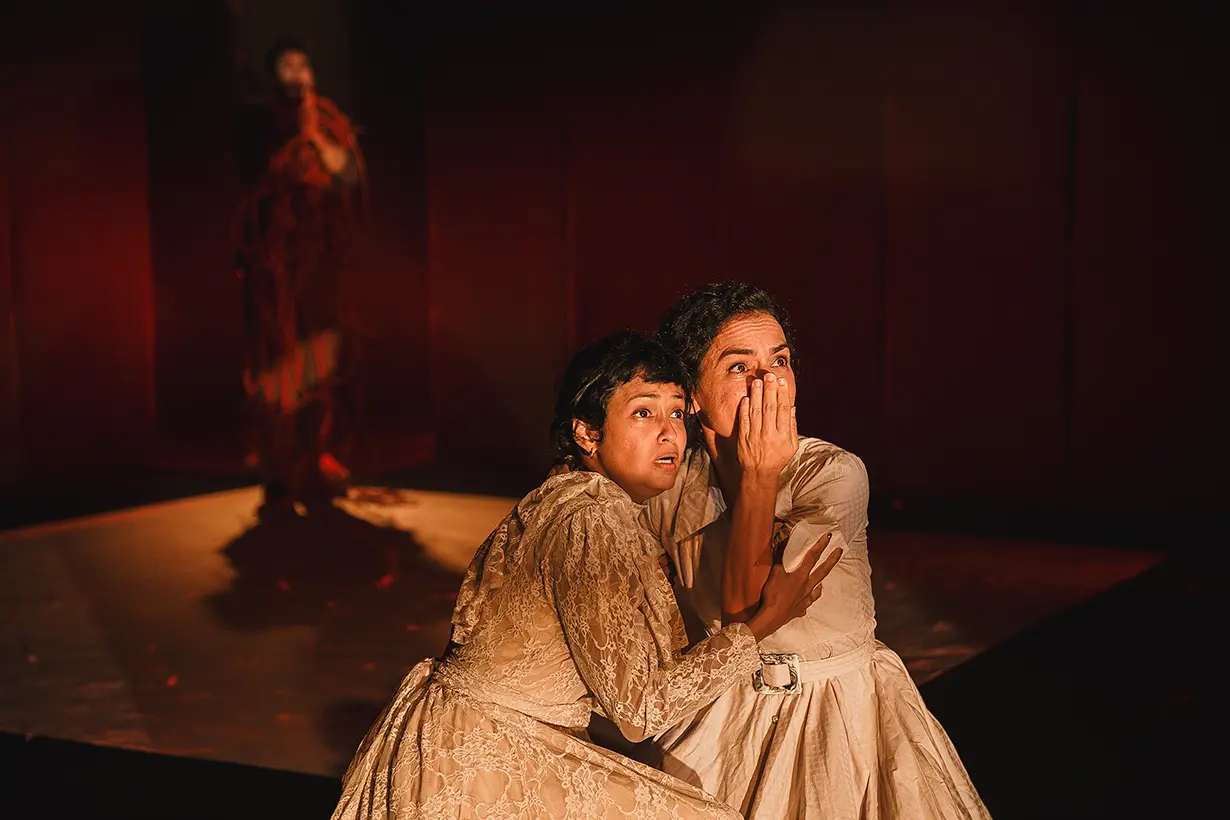
Unconfessed loves, twists of fate, and a letter that was never delivered make up the plot of Vermelho Melodrama (Red Melodrama). Beyond that: intimate and public letters, film scenes, memes, songs, masks, microphones, and a tangle of wires. Amid storms of emotion, some questions arise: what can a letter do in digital times? which bodies have the right to love? how far will the upheavals of our country’s political scene go? how can we activate feelings that mobilize change? Drawing on typical melodramatic constructions, the play proposes displacements of gender roles, of ways of narrating, and of the fictions that soak our reality.
The Performance
Awarded Best Performance at the 2019 Prêmio Braskem de Teatro, where it received six nominations and also took the trophy in the Special Category for the costumes and props by Luiz Santana, Vermelho Melodrama (Red Melodrama) dives into the melodrama genre and, from its typical constructions, raises questions about the melodramatic dimensions of our own reality. Based on a text by playwright Gildon Oliveira, adapted and staged by Jorge Alencar, the play, produced by Dimenti Produções Culturais, premiered in 2019 and was revived seven years later, in 2026, when it received seven nominations for the Prêmio Cenym de Teatro Nacional.
Unconfessed secrets, love triangles, and inflamed passions intersect with the melodrama of political events in Brazil and around the world. The central story, inspired by the famous “ketchup crime”, which took place in the interior of Bahia in 2011, revolves around the orphans Lúcio Mauro, Carlos Manuel, and Lurdes Maria, who were raised as siblings. The dramaturgical engine is a letter that was never delivered to its recipient, holding a revelation that could change the fate of each character.
As the main narrative unfolds, the cast comments on the scenes, reads letters, and makes associations with real-life situations, with films, texts, and other artistic creations: in a dynamic between living the plot and talking about the performance experience itself, emotions are amplified and place feeling ahead of purely rationalist thought. Quotations from Clarice Lispector, Isildinha Baptista Nogueira, Linn da Quebrada, and Georges Didi-Huberman raise questions such as the right to love in contemporary times.
The original text, Vermelho rubro amoroso… profundo, insistente e definitivo!, is like an ode to melodrama for detailing its architecture meticulously. A dramatic genre that established itself in French theatre at the end of the 18th century, characterized mainly by direct access to the spectator’s sentimentality, melodrama, since its birth, has had great popular appeal by mixing dramaturgy, music, pantomime, bodily narratives, vaudeville, and light comedy. Widely present in Brazilian culture, melodrama is highlighted in the play as a current phenomenon that crosses, in various ways, our subjectivities: affections, values, thoughts, singularities.
Credits
Original text: Gildon Oliveira (Vermelho rubro amoroso… profundo, insistente e definitivo!)
Staging and adaptation: Jorge Alencar
Creation and cast: Diogo Lopes Filho, Jorge Alencar, Lia Lordelo, Neto Machado, and Véu Pessoa
Created in collaboration with: Eduardo Gomes and Fábio Osório Monteiro
Songs: Leo Fressato
Original score and musical direction: Luciano Salvador Bahia
Art direction and visual identity: TANTO CRIA (Patricia Almeida, Fábio Steque, and Daniel Sabóia)
Technical coordination: Larissa Lacerda
Costumes and props: Luiz Santana
Assistant direction: Larissa Lacerda and Marina Martinelli
Artistic collaboration: Ellen Mello and Jacyan Castilho
Vocal supervision: Manuela Rodrigues
Lighting design: Larissa Lacerda
General coordination: Ellen Mello
Production: Tais Bichara and Cândida Monte
Finance: Marília Pereira
Administration: Julia Coelho
Communications: Paula Berbert
Produced by: Dimenti
Age rating: 16 years
Dimenti Produções Culturais

Founded in 1998 in Salvador, Bahia, Dimenti works across theatre, dance, audiovisual, literature, editorial projects, music, curatorship, and training. In its poetic research, it creates across different media, supports, and spaces, building performances, performative installations, and audiovisual and literary works focused on issues such as memory and archive, gender relations and feminisms, childhoods, and diversity. Its works have circulated in more than fifty Brazilian cities and in countries such as New Zealand, Germany, Serbia, Spain, Uruguay, and Palestine. Creator of the “Arte Dá Trabalho” movement, which gives its name to its headquarters, Casa Arte Dá Trabalho, Dimenti dedicates itself to producing authored and collaborative projects and partnerships, such as the IC Encontro de Artes, held since 2006.
Website: dimenti.com.br
Data accuracy and the veracity of the information on this page are the responsibility of Dimenti Produções Culturais. If you find an error or data discrepancy, please contact them through the links above or send a message to contato@dimenti.com.br

Open on your phone or tablet and share.
Share this page with another mobile device.
QUER TER PÁGINAS NO TRILHAS DA CENA?